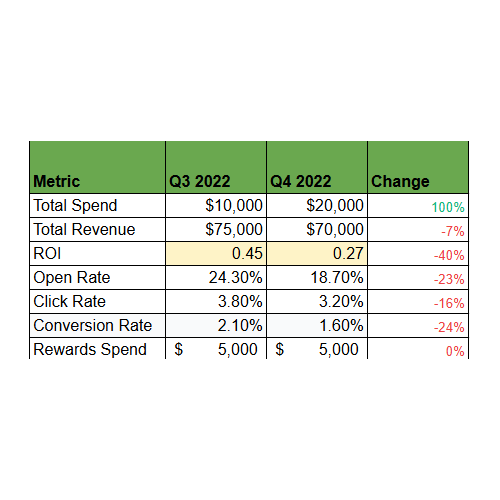

The C-levels has noticed that Q4 sales campaign performance seems weaker than Q3, despite increased spending. They asked for insights to guide Q1 strategy. As a data analyst, I have to take some steps before I come back with the actionable insights and recommendation.
SMART framework is used to generate the insights and recommendations. Specific (exactly what to do), Measurable (quantified outcomes), Achievable (realistic with resources), Relevant (tied to business goals), Time-bound (clear timeline)
STEP 1 – Data Collection
To start with the investigation, I have to collect all the relevant information from multiple sources.
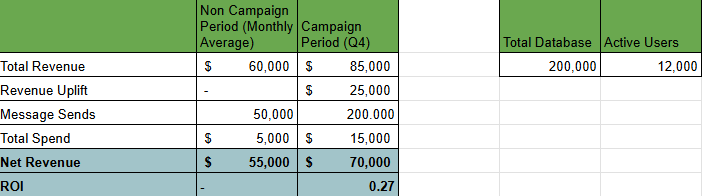
Key Metrics Collected:
- Open rates, click rates, conversion rates by campaign
- Customer lifetime value and purchase frequency
- Segment demographics and behavior patterns
- Campaign timing, send frequency, and content types
- Spend by campaign and channel
STEP 2 – Analyze & Identify Patterns
We compare quarterly performance to gather findings.
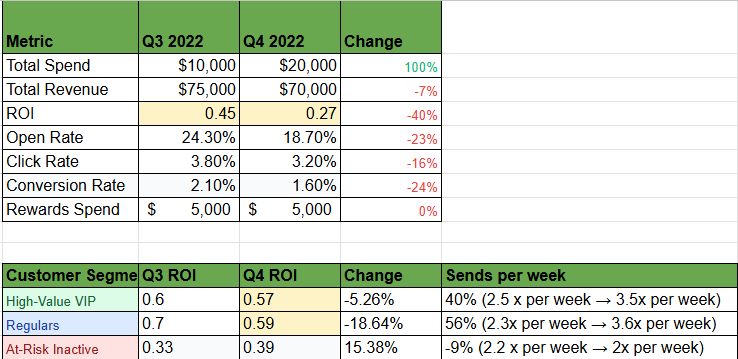
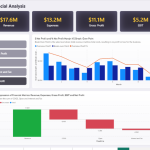
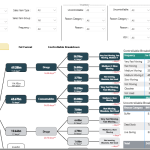
The “At-Risk” segment actually improved while high-performers declined. The regulars seems the most
STEP 3 Insights
Primary Insight: Email Fatigue in Core Segments
The Q4 strategy increased messaging frequency to high-value and regular customers by 40-56%, driving significant fatigue. These segments showed declines in ROI (5-18%% respectively) and conversions, while the “at-risk” segment—which received fewer emails—actually improved.
Impact: This over-mailing cost an estimated $15K in lost revenue and degraded our relationship with our most valuable customers.
Supporting Insight: Quality vs. Quantity
Promotional emails (63% of Q4 sends) had 2.1x lower ROI than educational content emails, yet we sent 2.4x more promotional content in Q4. High-value customers showed 41% higher engagement with product education vs. discount-focused campaigns. The fact that there was no better rewards means the campaign gave no better value for our customers, led to massive disappointment to the largest active segment.
Opportunity Insight: Untapped Reactivation Potential
The “at-risk” segment responded positively to reduced, targeted outreach (15% ROI increase). With 3,500 customers in this segment, a focused reactivation strategy could generate an estimated $7,000 in incremental Q1 revenue.
STEP 4 Recommendations
Immediate Actions (Week 1-2)
- Reduce frequency for High-Value VIP and Engaged Regulars:Cut from 4.0 to 2.0 emails/week for VIPs and 3.3 to 1.8 for Regulars. Projected impact: +$30K revenue
- Pause promotional campaigns to fatigued segments:Implement 14-day promotional cooling period for customers who received 8+ promotional emails in past 30 days (23K customers affected)
Q1 Strategic Initiatives
- Content Mix Rebalancing:Shift Q1 sends to 40% educational, 35% promotional, 25% engagement content (vs Q4: 63% promotional)
- Segment-Specific Strategies:Develop customized cadences – VIP: 2x/week value-focused; Engaged: 1.8x/week mixed; At-Risk: 2x/week reactivation sequence
- Reactivation Campaign:Launch 8-week “We Miss You” sequence for 3.5K at-risk customers. Target: $7,000 incremental revenue.
- Implement Fatigue Monitoring:Create automated alerts when segment engagement drops >15% week-over-week

One response to “Why did our sales campaign ROI decline 40% in Q4 despite a double increase in spend, and what segments should we prioritize in Q1?”
Hi, this is a comment.
To get started with moderating, editing, and deleting comments, please visit the Comments screen in the dashboard.
Commenter avatars come from Gravatar.